
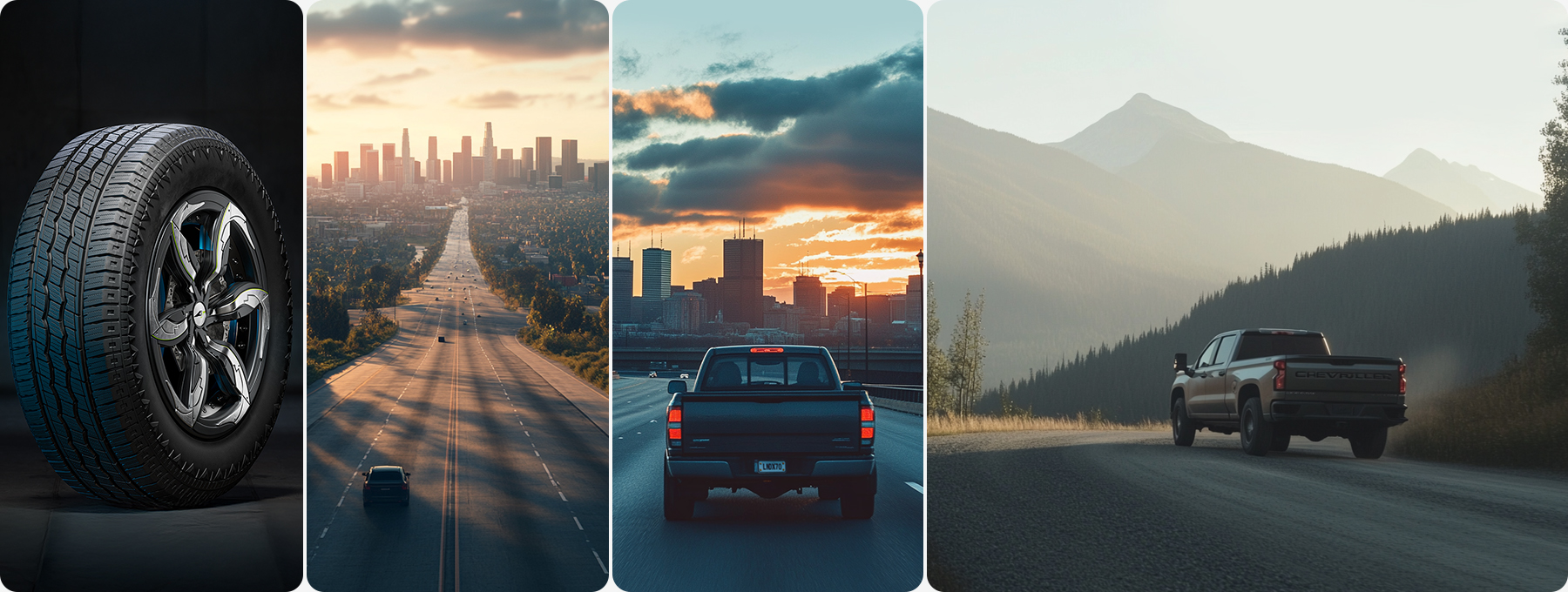
Trucks and SUVs have been the biggest selling category of vehicles on American roads for a long time, and there are a lot of them that are equipped with tires that aren’t really right for what the driver needs. Let’s talk about highway-terrain (H/T) and all-terrain (A/T) tires, how they differ, and the options that Atturo has in the H/T and A/T categories.
What do I need to know about H/T tires?
You can think of H/T tires as being similar to all-season or Grand Touring tires for passenger cars, except with reinforced construction and load capacity, making them suitable for trucks and SUVs. H/T tires are designed with:
Circumferential grooves that channel standing water through and behind the tire’s contact patch to resist hydroplaning
A reinforced center rib that enhances straight-line stability and road manners
A forgiving ride on the highway
Low road noise, with a tread pitch that’s randomized and computer tuned to cancel overtones and harmonics for a hushed ride
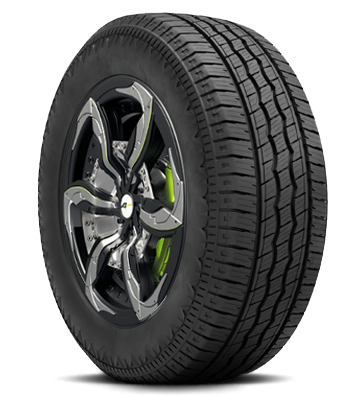
Those are a lot of the same performance targets that you’d expect from a quality set of all-season tires for a sedan or minivan. Atturo’s TrailBlade H/T is a good example of what an H/T tire can deliver. Its robust design includes a heavy duty belt and cord package and long-wearing tread compound, making it a great pick for trucks that haul heavy loads or tow trailers. The TrailBlade H/T also features a tread formulation that stays supple and flexible in subfreezing temperatures and a dense network of sipes, hair-thin slits that can slice through snow, slush or standing water. That’s enough to earn the 3PMSF (3 Peak Mountain Snowflake) rating for winter performance. Atturo backs the TrailBlade H/T with a 60,000 mile treadwear warranty.
For fleet vehicles like service trucks and route vans, there’s the Atturo FleetLine, an H/T tire that features three center channels for good evacuation of standing water from the tire’s contact patch to resist hydroplaning. The FleetLine’s broad shoulder blocks boost stability for high-top vans to help fight the topheavy feel that goes with them. The beveled groove edges in the main tread blocks are tuned to keep road noise low, and a network of sipes and interlocking chevrons round out the tire’s traction design in wet or dry conditions.
What do I need to know about A/T tires?
Here are some of the key features that go along with A/T tires:
Larger, more aggressive tread blocks, usually with a lug pattern
Higher void ratio – meaning wider and deeper spaces between the tread blocks for efficient drainage and self-cleaning of mud or debris as the tire turns
Tread compounds that are tough enough to resist punctures, cuts, abrasions in rough conditions
Sidewalls and shoulders that are reinforced for offroad use
Robust cord and belt packages
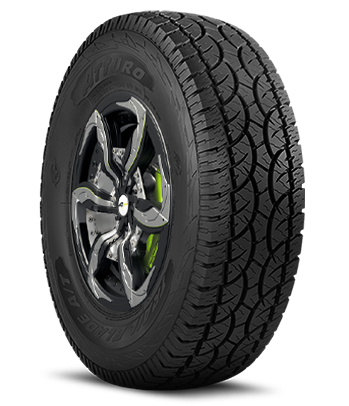
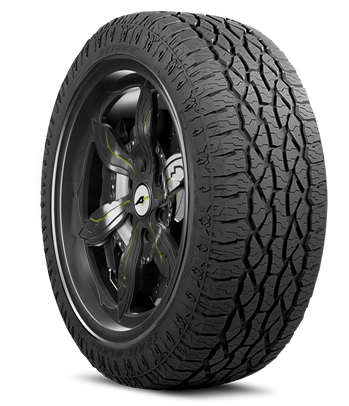
Many A/T tires like the Atturo TrailBlade ATS are designed to be able to claw their way out of deep mud or snow, with deep lugs at the shoulder that extend down onto the sidewall. The TrailBlade ATS also features a network of 3D sipes that are designed to actually widen and open up as the tire’s tread depth wears down. That sipe pattern, its tread compound and the deep voids between lugs are enough to give the TrailBlade ATS the 3PMSF rating for winter performance.
How should I choose between H/T and A/T tires?
H/T tires are the right call if your priorities include:
Fuel economy (H/T tires have lower rolling resistance for fuel efficiency)
Low noise and a refined ride
Lots of time on pavement
A/T tires are the way to go if you:
Plan on lots of time driving in loose dirt, mud, gravel such as ranch roads, jobsites, lease roads
Expect to take on rough winter driving
Need to haul heavy loads or tow a trailer
A/T tires do have a heavy-duty aesthetic, with their sidewall treatment (like the knife design on Atturo’s TrailBlade tires), aggressive lug pattern and taller profile. That makes them a great choice for 4WD trucks and SUVs that have a lift kit for extra ride height and ground clearance. While A/T tires have come a long way in terms of refinement (compared to their counterparts from 20 or 30 years ago), they still tend to be noisier than H/T tires. That’s why many people who buy A/T tires for a truck that’s mainly on the street come to find out that H/T tires might have been a better choice.
On the other hand, if you’ve got a truck that goes off the pavement regularly, you might find out that those H/T tires aren’t really up to the job in mud or gravel. Choose wisely, and whichever design you think is the best for your truck and your needs, Atturo has a set of tires that will be the right choice.





 EN
EN